Social Entrepreneurship

Risk, Talent, and Why Some Become Entrepreneurs and Others Don't

Published July 05, 2009 @ 01:35PM PT

Jared Diamond demonstrating how different talents matter in different environments, and showing that despite a world class education, he is no better suited to succeeding in some of those environments than others are in his.

In his best selling treatise "Guns, Germs, and Steel," Jared Diamond advances that the difference in evolution and "success" of human societies is based not on innate differences in capacity but in environmental factors that dictated how groups of early people met their basic needs, and in turn, how those conditions dictated the development of political organization, productive capacity, and more.

The essence of the argument is a total rejection of the notion that one group of people or another was natively smarter. Certain conditions led particularly societies to more quickly develop the capacity for production, politics, and war, and as those societies moved outward, they had advantages that allowed them to dominate others.

This matters because, if we accept this view of the evolution of human societies, what it suggests is that there is not a justifying innate reason that some societies are rich and some are poor. There is not a lack of capacity that preordained that those at the bottom of the ladder should be there. The flip side is that there is no special intellectual uniqueness that makes those societies that have succeeded (at least economically) more deserving of that success than those who have not.

I believe that this reality undermines any sort of deterministic perspective on global inequality, and implicates those with means to be obligated to those without. Perhaps even more as it relates to this blog, I think that this perspective has two big implications for how we think about global development and problem solving.

First, I think the way environment has impacted the success of societies as a whole is analogous to the way particular circumstances impact the way individuals are able to use their innate talents to be successful at whatever it is they happen to be successful at. That is, "Guns, Germs and Steel" is to societies what "Outliers" by Malcolm Gladwell is to individuals. The point is that in understanding why some succeed and others don't, the environment in which innate capacity is nurtured (or not) is as essential as that capacity itself in determining how it will manifest.

This point was reinforced for me a few days ago. I arrived in San Francisco only to have a sublet that I was supposed to live in for about 6 weeks fall through at the last minute. Suddenly without a home, I realized that I had literally dozens of people who I could stay with for a few days. My safety net was dense. This is one side of a larger network of resources which provide me the capital, connections, expertise, and other things essential to being a successful entrepreneur, social or otherwise.

These resources alone will not guarantee my success, but they fundamentally change the likelihood of that success, as well as significantly decreasing the risk involved with starting my own enterprise. These resources are by no means the norm, in fact they are the exception. As a sector that deeply prizes "risk taking," it's worth remembering that risk looks very different in different environments.

Second, I think that this argument reminds us of just how much opportunity there is to invest in the capacity of individuals and communities who, for whatever combination of reasons, have tended not to have access to the ingredients to let those capacities fully flourish.

Bill Clinton often says something to the effect that ‘around the world, talent and capacity are distributed in equal measure, but resources and opportunity are not.' I think that's dead-on, and I think that is the principle that animates those excited about investing in bottom of the pyramid enterprise.

As social entrepreneurs, I do believe we have an obligation to recognize the gifts around us, and to reinforce, in our actions and speech, that everyone has unique talents to be nurtured and given life.

Share this Post

Related Posts

Comments (6)

  1. Sharif Ibrahim

    "Second, I think that this argument reminds us of just how much opportunity there is to invest"


    Invest does not always mean financially.  This is especially true when you leave the West.  Its always alarming to find how people outside of the Western world invest greater in relationships rather than capitalizing.  Maybe its so alarming because this is so against our norm.  In a world where the therapist has replaced the position of friend, or extended family member, I often ask myself, "where did we go wrong?"

    There was a situation where I hired a camera man for a job in Egypt.  Through a series of unfortunate events for the camera man, he lost half of the tapes and didn't turn on the camera for a quarter of the filming.   This was a horrible situation for both parties, but my friend schooled me on how to handle the situation in traditional terms.  Instead of cutting the man out and making him pay, we are now friends.  I learned a valuable lesson of how to open up a relationship instead of playing a razor in a business deal.

    A friend from Sudan and I were recently talking and he told me, "Sharif, this is the loneliest place on Earth.  Everyone is going everywhere by themselves."  

    I just cannot explain how differently things are comparatively.  This may look slighted through the lens of money, but I urge you to step out of ethnocentric scope and ask a foreigner how business relates to family back home.  Food for thought:  if experience is a virtue in life, why do only 15% of Americans have passports?

    Lastly, in so many, many countries, the ability to become an entrepreneur is often checked by the government.  Many times a bribe is the standard and this gives an unfair advantage to the bottom of the pyramid.  In the case of talent, there can be a parallel drawn between the status of an entrepreneur and a natural social leader who never wears a title.  You could ask what the value of elders is in our current society.  Do nursing homes represent a success in our culture?  Or does it just impede with our entreprenuerial goals?  Where the fiber of social fabric in our society might lead to the success in capitalizing, another society might not deem it to be the top of the mountain.

    P.S.  As a student of history, this isn't mentioning tribal status privileges and colonial favoring which is unarguably prevalent and debilitating to the social entrepreneurial spirit.  

    P.S.S.  I would never let my mom live in a nursing home, even if it meant I go broke.

    Posted by Sharif Ibrahim on 07/05/2009 @ 04:24PM PT

  2. Reply to thread
  3. Mary Ann Thompson

    Sharif you are so right. As a first generation American my belief system is European in origin. Family doesn't mean anything. It's all about the almighty dollar. Nursng homes to me represent the castaways. In a hollywood youth orientated society our elderly aren't valued and God forbide if they get sick. I as a nurse who works in nursing homes have seen cooperate executives who have their mother in a nursing home where they could have her live with them and have 24/7 care. I was going through a terrible divorce in the 1990's when my mother got sick. With 3 children and by myself I took care of her till she died. Good for you, keep up your great thoughts and beliefs. Best of luck to you in your endeavors.

    Posted by Mary Ann Thompson on 07/06/2009 @ 04:41PM PT

  4. Darwin Widjaja

    Great article Sharif. I recently read "outliers" as well. I liked your bill Clinton quote, it's dead on. I'm definitely very blessed to be able to launch my own site http://tripntale.com

    Posted by Darwin Widjaja on 07/09/2009 @ 10:47AM PT

  5. Anis Salvesen

    Great article.  I was especially struck by the last sentence.  It is true that everyone has unique talents that are waiting to be nurtured.  There is so much wasted potential in the world because of lack of a support system.  It is quite sad and upsetting if you sit and think about it for a second.

    The good thing is, these days it is really easy to actually do something about it.  Young people the world over need not sit and uselessly wait for a chance in a million of having the opportunity to fulfill their potential.  It is easier than ever for people, for companies to make a change, to positively impact society and change someone's life for the better.

    Here is one great way I found to empower youth to use their talents to the utmost.  It's an opportunity to volunteer in Tanzania and help the local youth to improve their lives and the lives of all of the other members in their communities.  It's on a site called UniversalGiving, which allows anyone to find fully vetted volunteer opportunities all over the world.  The link for this particular volunteer project in Tanzania is as follows (check out http://www.universalgiving.org for more): http://is.gd/1tBzh.

    Again, thank you so much for your writing.  You referenced two books I really found thought-provoking.

    Regards,

    Anis Salvesen

    Posted by Anis Salvesen on 07/10/2009 @ 07:44AM PT

  6. Siddharth Barthakur

    My experience in one of the remote villages of India’s North East was that when my car broke down the villagers helped me with a mechanic from the nearest town some 22 KMs (13.7 Miles) away. A young man drove his motorbike to bring the mechanic on his pillion. Another villager arranged accommodation for me to spend the night comfortably. The three course dinner I had with the community that night had fish from the community pond, vegetables from their kitchen gardens, and the brew made from native rice. We had a bone fire party where the young people and the older citizens danced to the tune of folk music. A car breakdown turned into a complete celebration of life. There was entrepreneurship here, no one took risk, there was not much talent involved and the resources available were scattered. It was the environment that the community built over the years that spread the spirit of social entrepreneurship.   

    Back in New Delhi, I came across a person who initiated a road safety campaign, triggered by the accidental death of his 16 year old niece. While heading back home from the school this young girl was hit by a car and was profusely bleeding for a quarter of an hour. None of the passers by took note of her including the police. A gentleman saw a bleeding body struggling to hold on to life and discovered that she was the best friend of his daughter. He quickly carried her to the nearest hospital. She was declared brought dead.

    After hearing this story and that remote village experience, I thought to myself as to why did the car not hit her in that village! The thought was bizarre but my mind had no other options. Another thought that disturbs me every morning is that - is it the money that is dividing our race to this extent?


    Posted by Siddharth Barthakur on 07/30/2009 @ 05:35AM PT

  7. My experience in one of the remote villages of India’s North East was that when my car broke down the villagers helped me with a mechanic from the nearest town some 22 KMs (13.7 Miles) away. A young man drove his motorbike to bring the mechanic on his pillion. Another villager arranged accommodation for me to spend the night comfortably. The three course dinner I had with the community that night had fish from the community pond, vegetables from their kitchen gardens, and the brew made from native rice. We had a bone fire party where the young people and the older citizens danced to the tune of folk music. A car breakdown turned into a complete celebration of life. There was entrepreneurship here, no one took risk, there was not much talent involved and the resources available were scattered. It was the environment that the community built over the years that spread the spirit of social entrepreneurship.   

    Back in New Delhi, I came across a person who initiated a road safety campaign, triggered by the accidental death of his 16 year old niece. While heading back home from the school this young girl was hit by a car and was profusely bleeding for a quarter of an hour. None of the passers by took note of her including the police. A gentleman saw a bleeding body struggling to hold on to life and discovered that she was the best friend of his daughter. He quickly carried her to the nearest hospital. She was declared brought dead.

    After hearing this story and that remote village experience, I thought to myself as to why did the car not hit her in that village! The thought was bizarre but my mind had no other options. Another thought that disturbs me every morning is that - is it the money that is dividing our race to this extent?


    Posted by Siddharth Barthakur on 07/30/2009 @ 05:46AM PT

Add a Comment

For your comment to be published, you will need to confirm your email address after submitting your comment.

If you already have an account, click here to log in.

Comments on Change.org are meant for further exploration and evaluation of the ideas covered in the posts. To that end, we welcome constructive comments. However, we reserve the right to delete comments that are offensive, abusive, or off-topic; that contain ad hominem attacks; or that are designed to subvert or hijack comment threads rather than contribute to them. Repeat offenders may be permanently removed from the site at our discretion.

Author

Twitter Feed

Nathaniel Whittemore

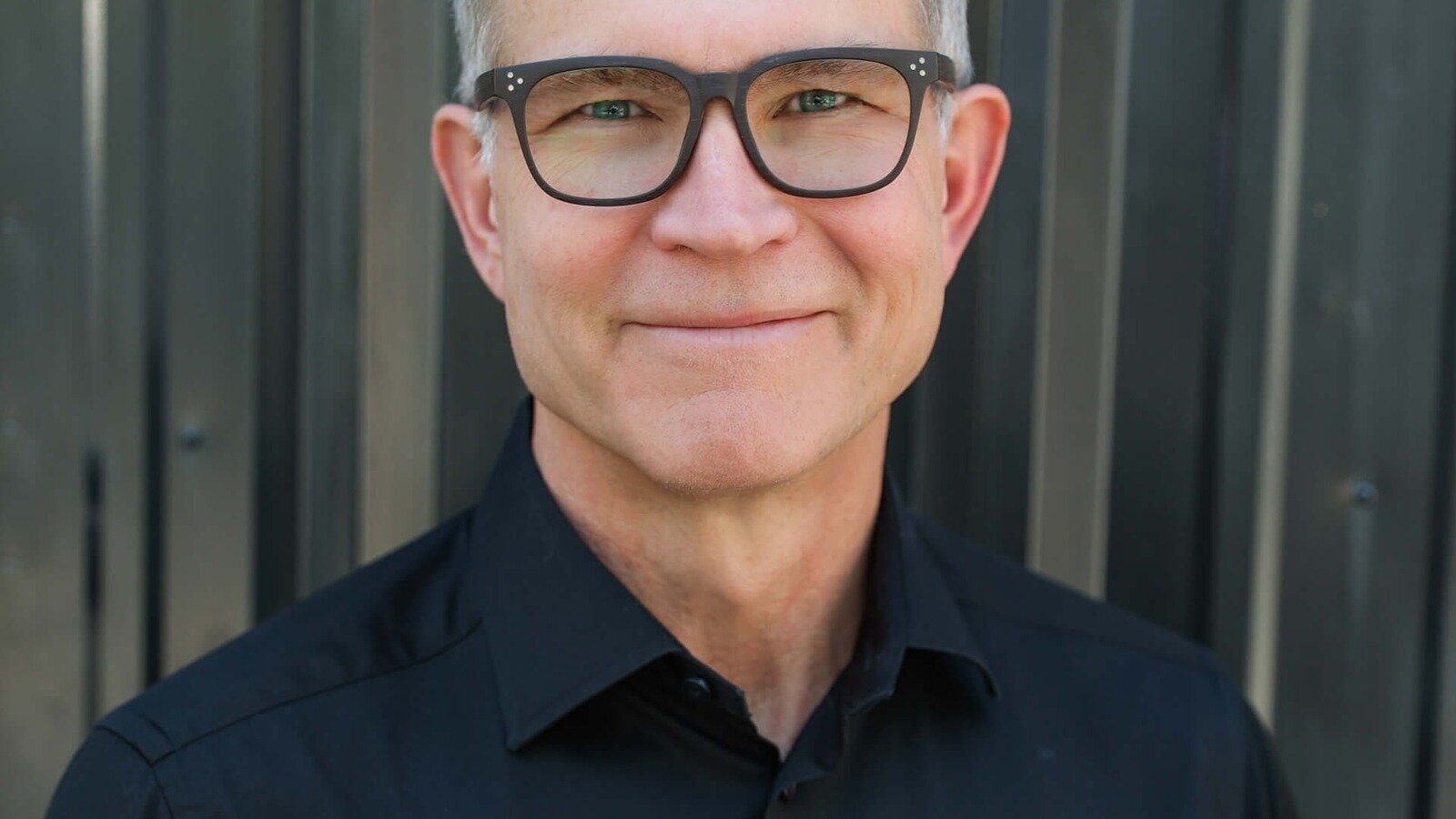
Nathaniel is the founding Director of the Center for Global Engagement at Northwestern University, which works annually with hundreds of students in dozens of countries around the world through curricular programs and student project incubation.

Featured Social Entrepreneurship Actions

View all Top Actions  Separator  Start a Petition »

close

This user's Profile page is not public. They have restricted it to only their friends.

Already a Member?

Create an Account

You must create a Change.org account to complete this action.
If you already have an account click here.